

How to Start Paying Yourself: A Flower Farmer’s Guide to Profit First
Why passion alone cannot sustain a farm and what to do about it
Many flower farm owners love growing plants, creating beauty, and building something meaningful in their community. Yet without intentional financial systems, passion alone cannot sustain a business. Farms that do not pay their owners a living wage function as expensive hobbies with long hours.
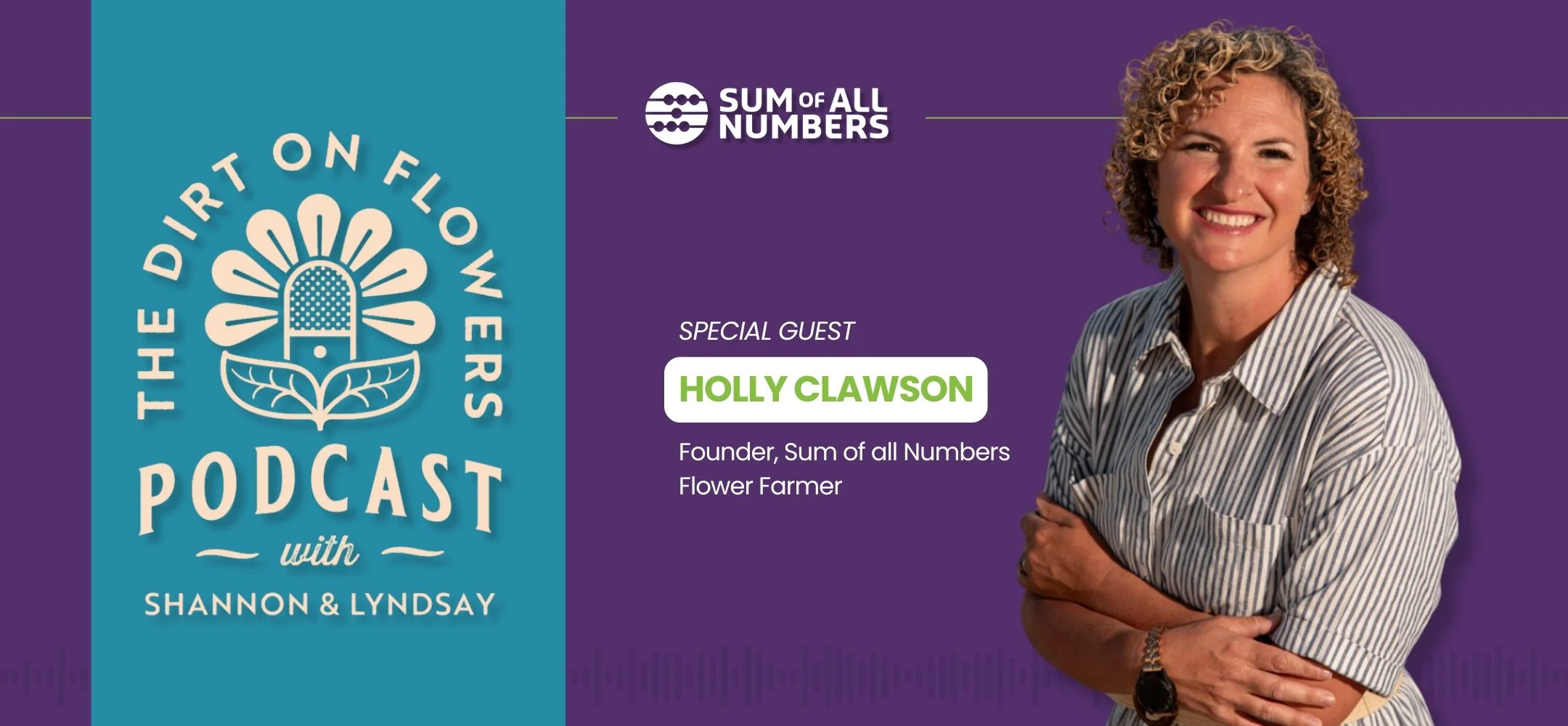
Holly Clawson, founder of Sum of All Numbers and a Profit First-certified financial advisor, joins The Dirt on Flowers to outline how flower farmers can break the invoice-to-invoice cycle and run profitable operations. Holly combines financial expertise with hands-on farming experience, running flowers, vegetables, and livestock while raising five children in California.
The hidden struggle of flower farmers
Most small business owners are not making money. Many barely pay themselves, live from credit card to credit card, and mask financial stress behind appearances of success. This struggle is not a reflection of skill or work ethic. Traditional accounting models, designed for corporations with steady revenue, fail seasonal businesses. Flower farms face wildly fluctuating income, and using a system not built for that reality makes getting ahead nearly impossible.
Why the traditional formula fails
The standard formula—Sales minus Expenses equals Profit—puts profit last. Revenue is spent immediately on expenses, leaving nothing for the owner or savings. Seasonal misalignment worsens the problem: spring sales fund summer and fall expenses, leaving little for winter obligations. Tax season can become a financial shock.
Profit First: flipping the formula
Profit First inverts the traditional model:
Sales – Profit – Owner’s Pay – Taxes = Operating Expenses
Paying profit and owner compensation first creates a structured approach to managing cash flow. This system forces businesses to operate within means, prioritize expenses, and make intentional financial decisions.
The envelope system for farms
Profit First uses separate bank accounts instead of physical envelopes:
Income Account: All revenue arrives here first.
Profit Account: Allocated first for sustainability.
Owner’s Pay Account: Ensures the owner is compensated.
Tax Account: Covers tax obligations.
Operating Expenses Account: Remaining funds to run the farm.
Additional farm-specific accounts can improve financial control:
Bulb Purchase Account: Covers seasonal inventory purchased months after income is received.
Wedding Deposit Account: Holds client deposits until services are delivered.
Cooler Fund: Small monthly savings toward large equipment purchases.
Employee Savings Account: Pre-funds payroll before hiring.
These accounts create visibility and intentionality, shifting farms from reactive spending to proactive management.
Adapting to seasonal income
Profit First works with seasonal cash flow because allocations are based on percentages, not fixed dollar amounts. Big months allocate more funds to each account; slow months allocate less while maintaining consistent priorities. This system provides clarity, reduces stress, and prevents financial panic.
Target percentages for farms earning $0–$250,000 annually:
| Profit | 5% |
| Owner’s Pay | 50% |
| Taxes | 15% |
| Operating Expenses | 30% |
Owners should increase allocations gradually, by 1% per quarter, to build sustainable habits.
Overcoming barriers
Multiple bank accounts: Modern banking platforms like Relay simplify management with up to 50 free accounts and automated transfers.
Accountability: Success depends on consistent allocation. Farmers can:
Partner with a Profit First buddy
Join communities like The Dirt on Flowers Insiders
Hire a Profit First professional
Automate transfers to build easy accountability
Starting small: Even moving 1% of revenue into profit and owner pay builds habits and psychological momentum, regardless of immediate cash availability.
Employee planning and payroll
Hiring should follow a pre-funded payroll system:
Calculate total cost including taxes and benefits (+30%).
Fund a dedicated payroll account for three months.
Hire only once consistent funding is sustainable.
This method ensures payroll stability, reduces risk, and accounts for seasonal income variations.
Beyond budgets: rolling forecasts
Static budgets fail when reality deviates from projections. Rolling 12-month forecasts allow farms to adjust quarterly, track actual performance, and maintain financial guardrails without guilt or stress.
Preventing burnout through financial clarity
Financial chaos drives burnout. Profit First builds:
Psychological safety through clear financial visibility
Real cushions for taxes, slow months, and emergencies
Confidence to take breaks without financial stress
Validation of the owner’s work through visible pay
Visionaries vs. Implementers
Profit First should fit the owner’s working style:
Visionaries benefit from automation to ensure consistency
Implementers benefit from structured, manual systems
Customizing the approach ensures adherence and success
Listen to the full episode
Ready to stop living from invoice to invoice? Listen to Holly's complete conversation with Shannon and Lindsay for more stories, insights, and the honest reality of what it takes to build a profitable flower farm. Your future self (and your bank account) will thank you.
Spotify or Apple Podcasts. You can also visit their website: The Dirt on Flower
